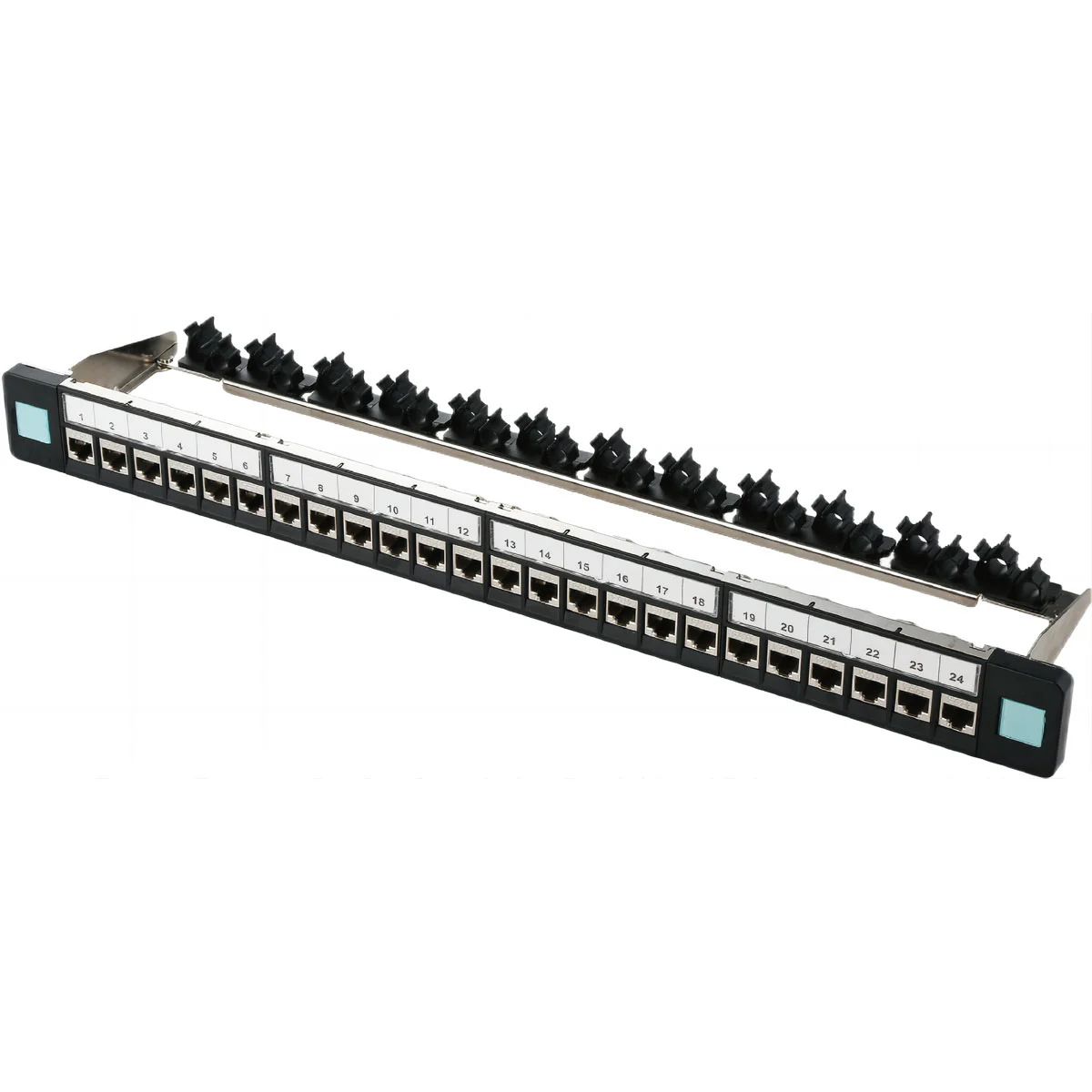
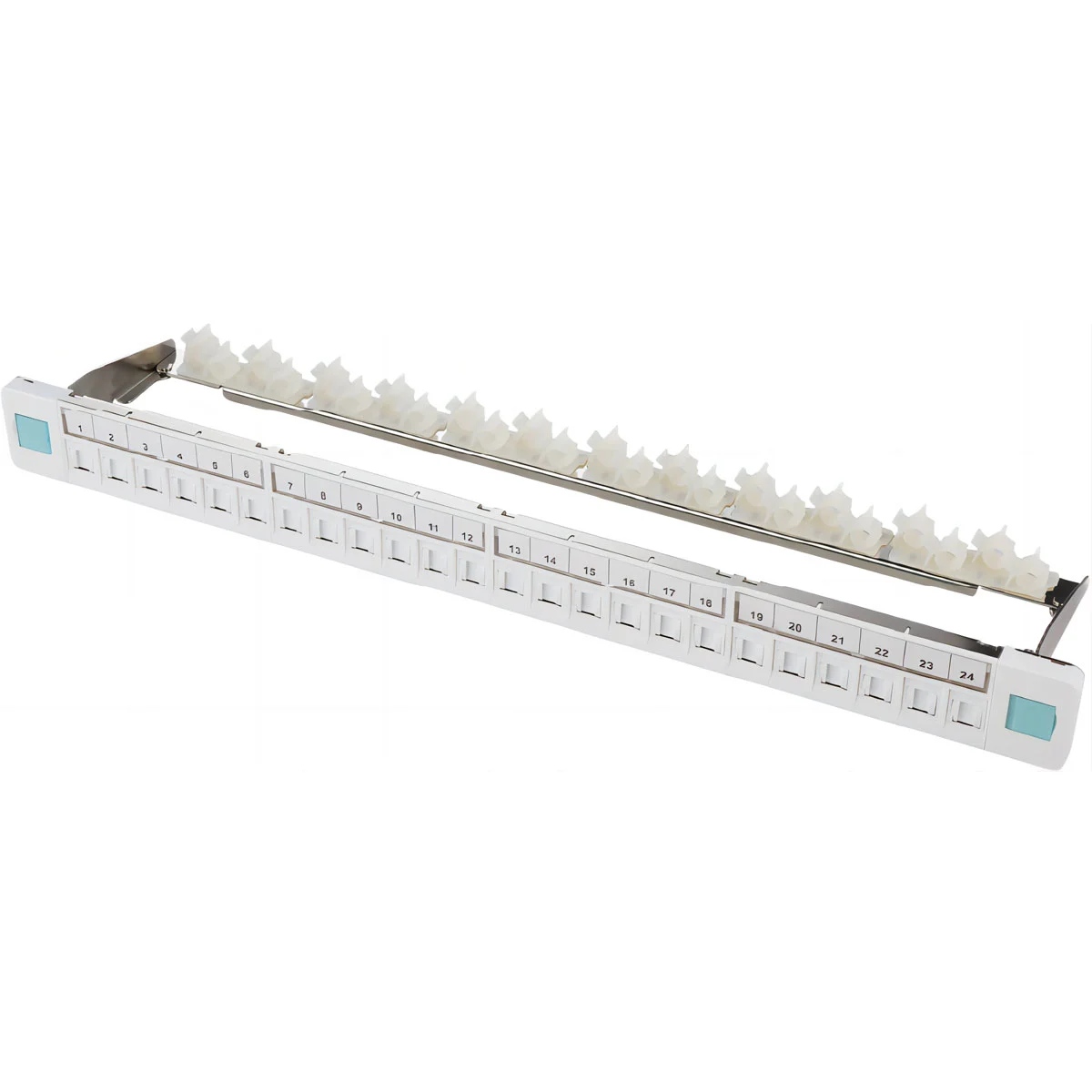
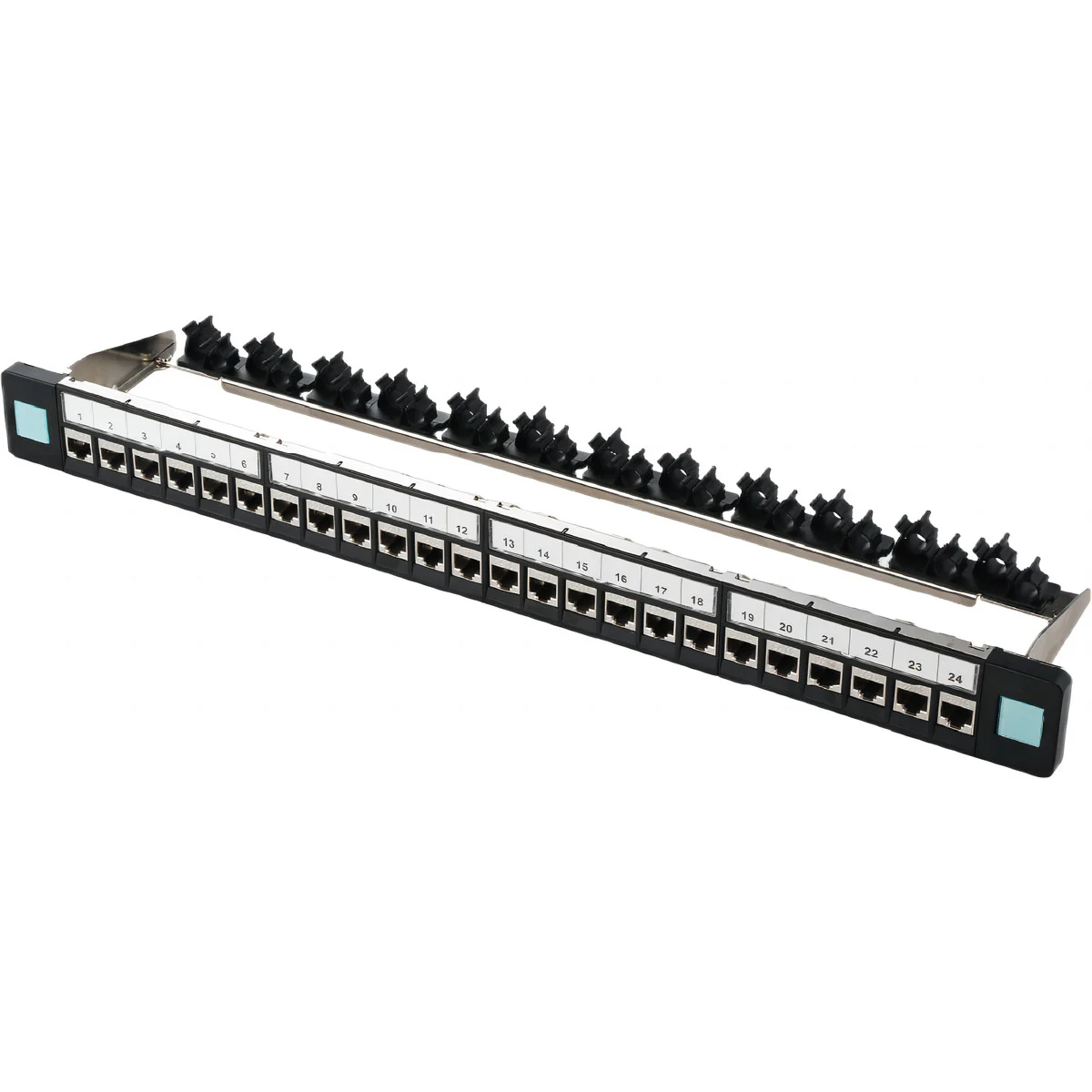
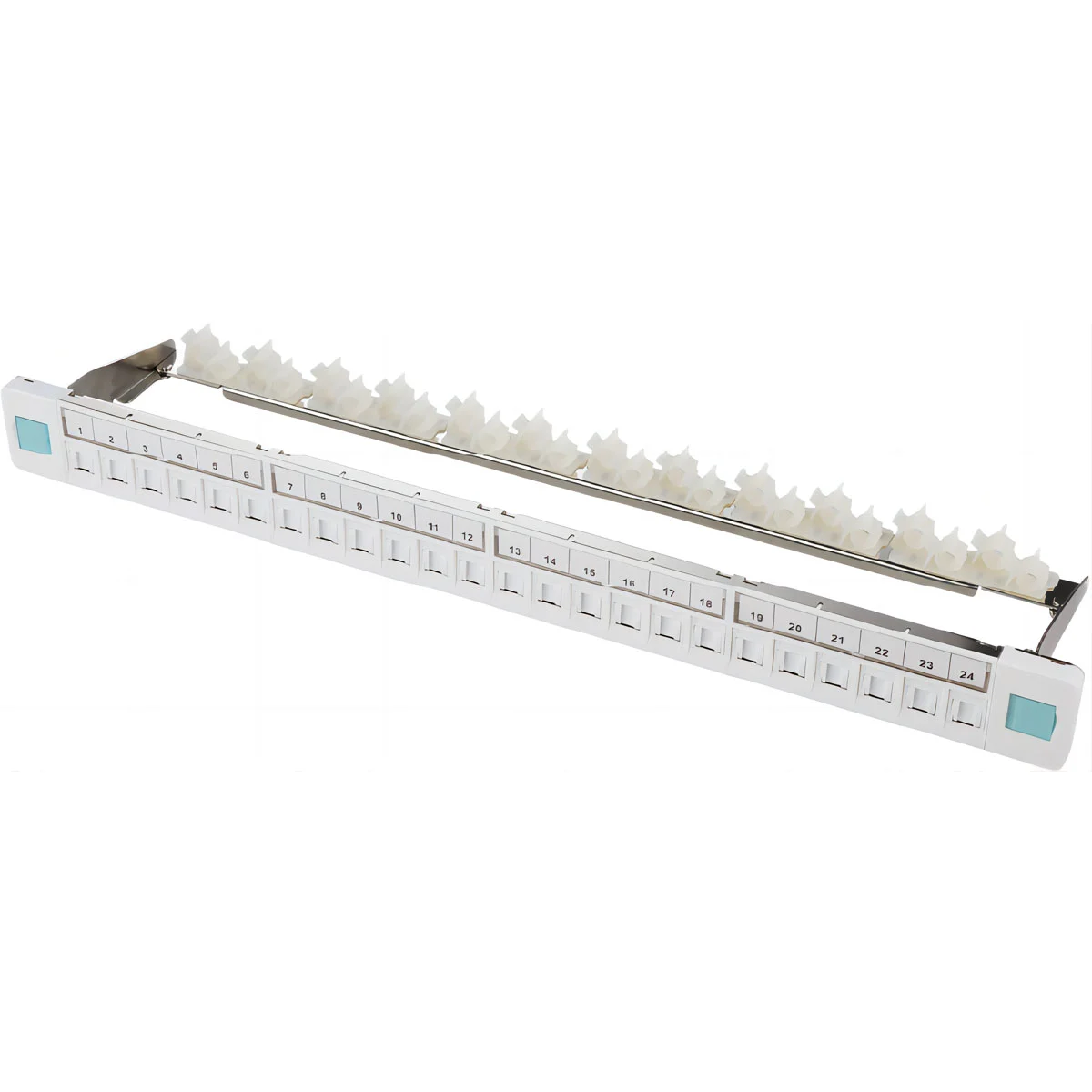
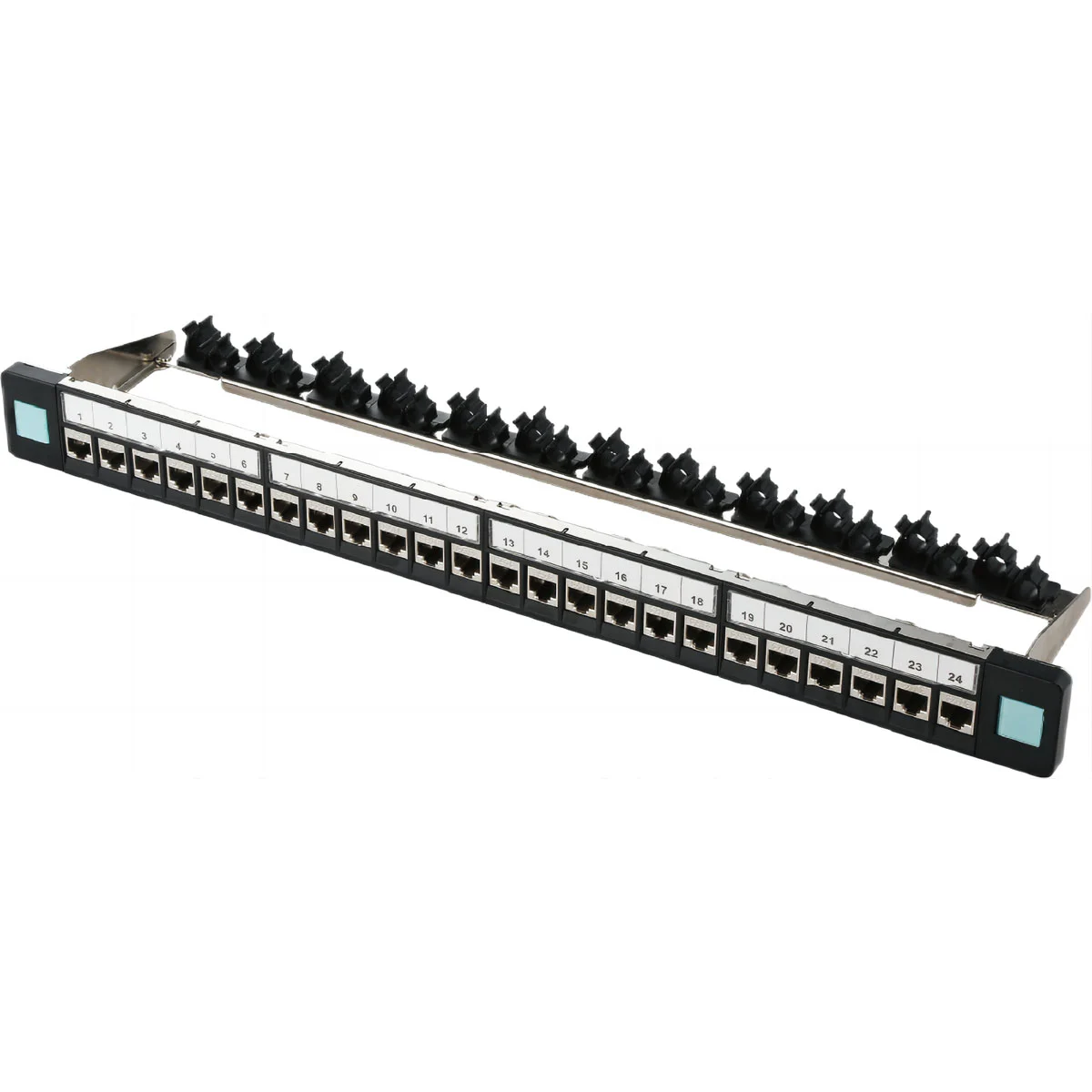
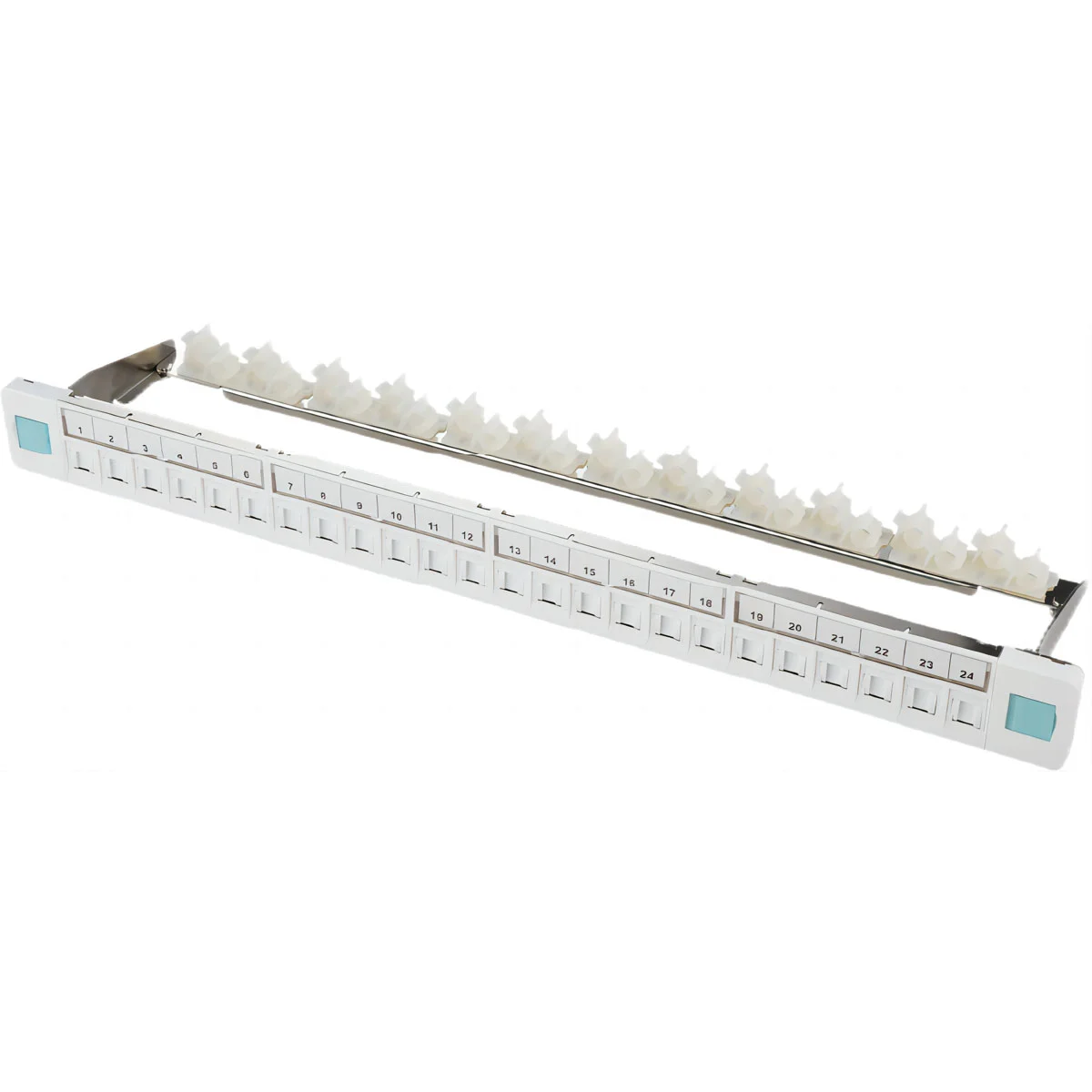
A patch panel, also known as a patch bay, patch field, or jack field, is a crucial component in network and telecommunications infrastructure. It serves as a central point for managing and organizing cable connections, making it easier to connect, disconnect, and reconfigure circuits.
Common Types of Patch Panels
1.Ethernet Patch Panels: These are the most common type and are used for organizing Ethernet cables (Cat5e, Cat6, Cat6a, etc.). They feature RJ45 ports on the front.In shielded structured cabling environments, shielded FTP patch panel solutions are often applied for improved EMI resistance.
2.Fiber Optic Patch Panels: Used for managing fiber optic cables, these panels have ports for various types of fiber connectors such as LC, SC, ST, or MTP/MPO.
3.Audio/Video Patch Panels: Used in broadcasting and AV setups, these panels manage audio and video signal cables, including structured cabling solutions such as cat6 ftp patch panel for improved shielding and network performance.
4.Coaxial Patch Panels: Used for managing coaxial cables, often in television and radio broadcasting.
Patch Panel Applications
1.Data Centers: Patch panels are extensively used in data centers to manage the vast number of network connections between servers, storage systems, and networking equipment. In high-density environments, solutions like fiber optic patch panel are often deployed to improve fiber cable organization and scalability.
2.Offices: In office environments, patch panels help in organizing the network infrastructure, making it easier to manage workstations, printers, and other networked devices.
3.Telecommunications: Telecom companies use patch panels to manage telephone lines and other communication circuits.
4.Broadcasting: Audio and video patch panels are used in broadcasting studios to manage signal routing between various equipment.


 EN
EN
 fr
fr  de
de  es
es  ru
ru  pt
pt  ar
ar  vi
vi  th
th  id
id 




 Call us on:
  Email Us:
  No.10 Xumutang Road, Lishui Economic Development Zone, Nanjing, China