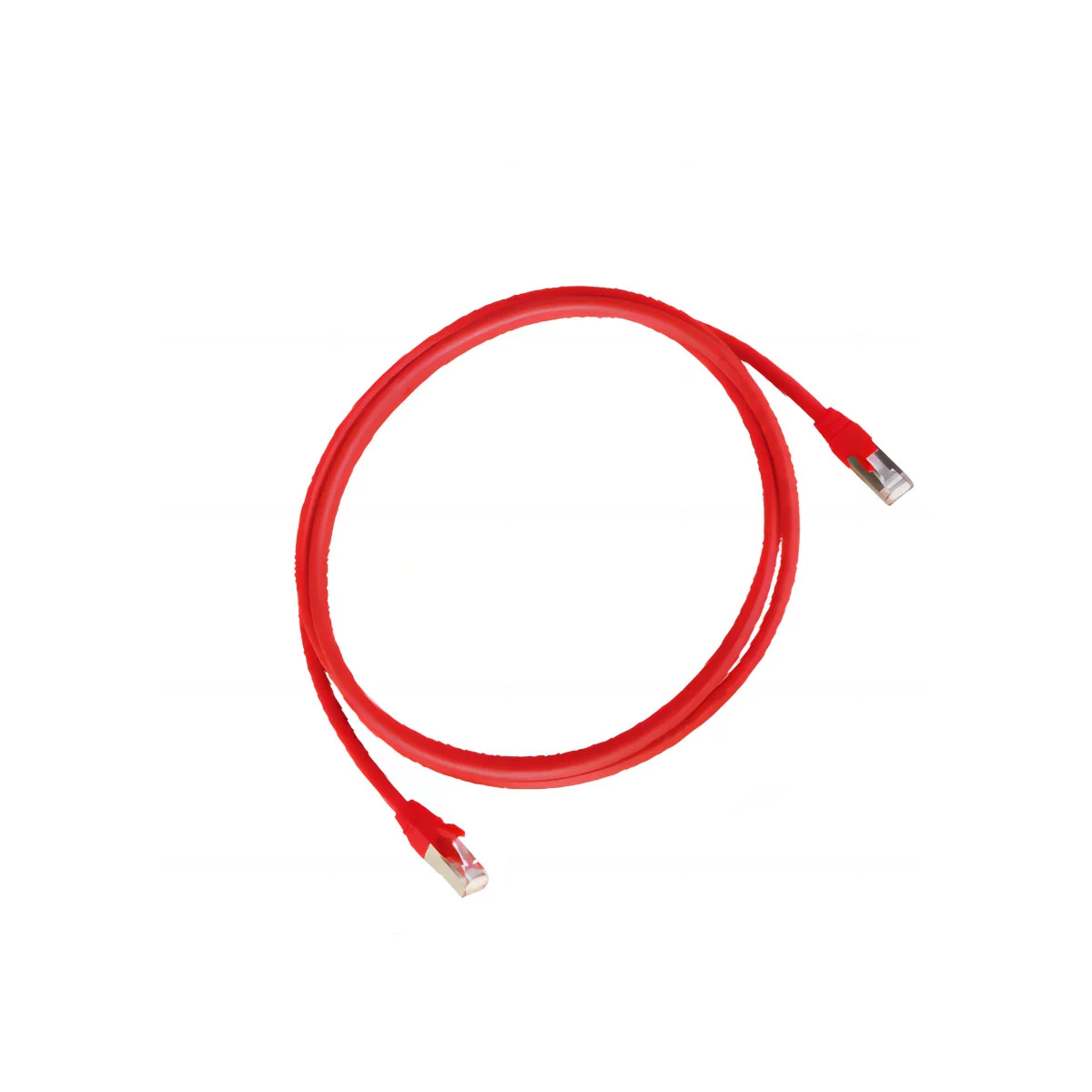
FTP patch cord and FTP patch cable are often used interchangeably in structured cabling, but they are not always identical in usage context. In short, both refer to shielded Ethernet patch leads using Foiled Twisted Pair (FTP) construction, but “patch cord” typically emphasizes short, factory-terminated connection leads for equipment, while “patch cable” is a broader term that may include both patch leads and longer installation cables. Understanding this distinction helps buyers choose the right patchcord ftp / ftp patch cable / patch ftp solution for network stability, EMI protection, and deployment scenarios.
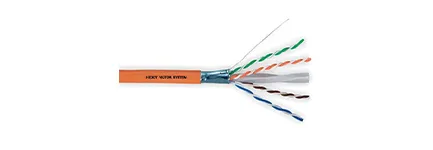
FTP (Foiled Twisted Pair) refers to Ethernet cables where all twisted pairs are wrapped in a common foil shield to reduce electromagnetic interference (EMI). This structure is widely used in environments with electrical noise such as industrial systems, data centers, and telecom rooms.
Both FTP patch cord and FTP patch cable share this shielding structure: Foil shielding around all twisted pairs. Improved resistance to external interference. Stable signal transmission for Gigabit and 10G networks. Compatibility with RJ45 connectors in structured cabling systems
In most B2B projects from suppliers like HEDOT. FTP products are offered in Cat6 and Cat6A categories for high-performance networking.
Although both terms refer to FTP-shielded Ethernet products, their usage differs in practice.
FTP Patch Cord: Usually short (0.5m–5m), factory-terminated with RJ45 connectors on both ends, used for connecting devices to patch panels or switches.
FTP Patch Cable: A broader term that may include patch cords and bulk cable assemblies, sometimes used for longer or custom installations.
Feature | FTP Patch Cord | FTP Patch Cable |
Typical Length | 0.5m – 5m | 1m – 50m+ (varies) |
Termination | Pre-terminated RJ45 both ends | May be pre-terminated or bulk |
Usage | Rack, switch, patch panel | Structured cabling, extensions |
Flexibility | High (plug-and-play) | Medium to high (depends on type) |
Installation Scope | Short-distance connections | Horizontal/vertical cabling |
Common Keyword Usage | patchcord ftp | ftp patch cable / patch ftp |
In procurement, the keyword patch ftp is often used generically in catalogs, but technically it still refers to FTP-shielded Ethernet patch solutions.
Choosing between FTP patch cord and FTP patch cable depends on application scenarios and installation structure.
Data center rack interconnections. Switch-to-patch panel links. Server room short-distance connections. Testing or temporary network setups.
Office horizontal cabling systems. Building backbone extensions. Customized network layouts. Long-distance structured wiring.
For professional deployment, many engineers combine both within a full FTP shielding system to ensure EMI protection from backbone to endpoint.
When sourcing ftp patch cable or patchcord ftp products for B2B projects, procurement teams should evaluate the following:
Category level (Cat6 / Cat6A). Shielding structure (FTP vs UTP vs S/FTP). AWG size (commonly 23AWG or 24AWG). Connector quality (gold-plated RJ45 recommended). Transmission performance (1G / 10G support).
EMI exposure level (industrial vs office). Temperature range for deployment. Fire rating (CM, CMR, LSZH options).
Factory testing and certification (Fluke test preferred). OEM/ODM customization capability. Consistency in shielding and jacket quality. Bulk packaging and logistics support.
Unit cost vs long-term durability. MOQ flexibility for OEM orders.
Delivery lead time. After-sales technical support.
A reliable supplier should provide full documentation and testing reports for every batch of FTP patch products.
FTP patch cord and FTP patch cable are widely used in modern network infrastructures: Data centers requiring high-density shielding. Industrial automation systems with high EMI interference. Enterprise LAN networks. Security surveillance systems (IP cameras). Telecom and server rooms.
In these environments, shielded ftp patch cable ensures stable transmission and reduces packet loss caused by external noise sources such as motors, transformers, and power lines.
Not exactly. FTP patch cord usually refers to short pre-terminated cables, while FTP patch cable is a broader term that may include longer or bulk cable types.
FTP patch cord is more commonly used in data centers due to its short length, flexibility, and easy plug-and-play installation.
Yes, FTP patch cable is suitable for structured cabling and longer horizontal runs when properly installed.
Yes, FTP shielding reduces electromagnetic interference, improving signal stability and reducing data loss in noisy environments.
Cat6 supports standard Gigabit networks, while Cat6A FTP is recommended for 10G networks and high-performance enterprise environments.
For stable performance and industrial-grade shielding, HEDOT provides a full range of CAT6 and CAT6A FTP patch solutions designed for enterprise and data center applications. The CAT6A FTP patch cord series is especially suitable for high-bandwidth, low-interference environments requiring long-term reliability.
Understanding the difference between FTP patch cord and FTP patch cable helps ensure correct specification, better shielding performance, and cost-efficient procurement. Whether you are building a data center, upgrading enterprise LAN infrastructure, or sourcing OEM network components, selecting the right FTP solution is critical for long-term stability.
For technical datasheets, bulk quotation, or OEM customization support, contact HEDOT to request specifications, evaluate samples, or discuss wholesale FTP patch solutions tailored to your project requirements.
 Call us on:
  Email Us:
  No.10 Xumutang Road, Lishui Economic Development Zone, Nanjing, China
 EN
EN
 fr
fr  de
de  es
es  ru
ru  pt
pt  ar
ar  vi
vi  th
th  id
id