Fiber optic patch panels are essential components for organizing, protecting, and managing fiber connections in data centers, telecom rooms, and enterprise networks. The main types include rack mount fiber patch panels, wall mount fiber patch panels, and high-density fiber patch panels. For buyers sourcing from a China fiber patch panel factory, selecting the right structure depends on installation space, fiber count, maintenance requirements, and OEM customization needs.
As a professional fiber optic cable and connectivity manufacturer, HEDOT provides OEM fiber patch panel solutions with customized designs, strict quality control, and production capabilities for global distributors, system integrators, and network installers.
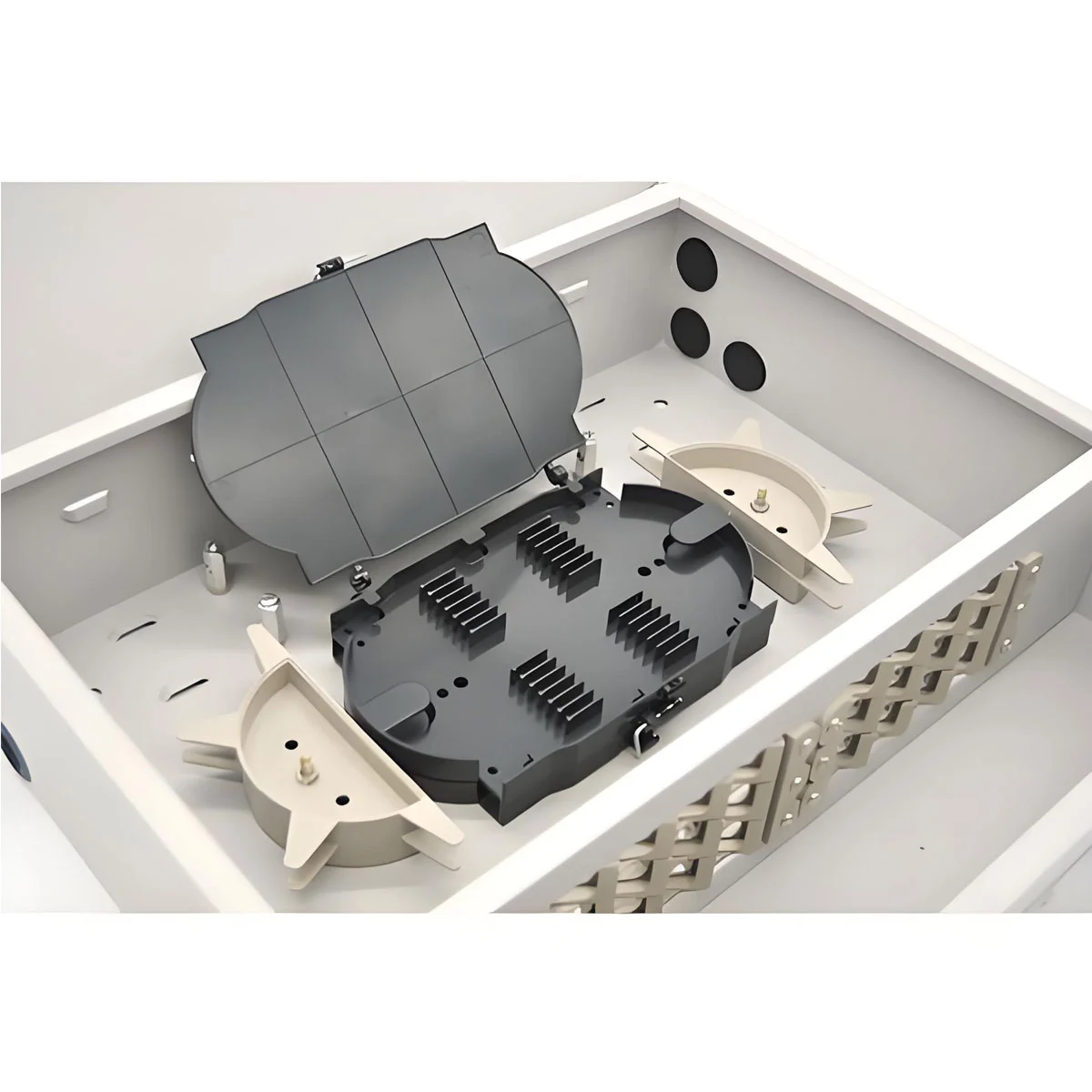
A fiber optic patch panel is a hardware enclosure used to terminate, splice, organize, and distribute optical fibers. It protects delicate fiber connections while allowing easier cable management and future expansion.
A typical fiber patch panel includes:
- Fiber adapter panels
- Splice trays
- Cable management systems
- Fiber pigtails or connectors
- Protective enclosures
For projects requiring stable fiber management, choosing the correct patch panel type can reduce installation time and improve network reliability.
Rack mount fiber patch panels are designed for standard 19-inch network cabinets and server racks. They are widely used in data centers, telecom rooms, and structured cabling projects.
Advantages:
- Suitable for high-volume fiber connections
- Easy installation in standard racks
- Supports modular adapter configurations
- Convenient maintenance and upgrades
Rack mount models are commonly selected for backbone cabling and large-scale network deployments.
Wall mount fiber patch panels are compact solutions for locations without rack cabinets. They are commonly installed in small offices, access networks, security systems, and industrial environments.
Advantages:
- Saves rack space
- Flexible installation options
- Suitable for lower fiber counts
- Provides protection in limited spaces
High-density fiber patch panels are designed for environments requiring maximum fiber capacity within limited rack space. They are commonly used with MPO/MTP solutions and modern data center cabling.
Advantages:
- Higher port density
- Better space utilization
- Supports high-speed network upgrades
- Improves cable organization
Fiber Optic Patch Panel Type | Installation Method | Typical Applications | Main Advantages |
Rack Mount Fiber Patch Panel | Installed in standard 19-inch rack cabinets | Data centers, telecom rooms, enterprise networks, backbone cabling systems | High fiber capacity, easy cable management, convenient maintenance and future expansion |
Wall Mount Fiber Patch Panel | Mounted directly on walls or small distribution boxes | Small offices, FTTH networks, security systems, industrial environments | Saves rack space, flexible installation, suitable for low to medium fiber counts |
High-Density Fiber Patch Panel | Installed in high-density rack environments | Large-scale data centers, cloud computing facilities, high-speed network infrastructure | Maximum port density, efficient space utilization, supports MPO/MTP and high-speed upgrades |
When purchasing from a China fiber patch panel factory, buyers should evaluate manufacturing experience, customization ability, and quality management systems.
HEDOT supports OEM and bulk production requirements, including:
- Customized panel dimensions and structures
- Different adapter configurations such as LC, SC, FC, and ST
- Custom labeling and packaging
- Private brand manufacturing support
- Flexible production quantities for distributors and contractors
A reliable OEM supplier should not only provide products but also support engineering communication, sample approval, production monitoring, and delivery management.
For related solutions, customers can also explore HEDOT’s fiber optic cable products and fiber optic adapters to build complete connectivity systems.
Quality control is critical because fiber connectivity directly affects network performance. A professional manufacturer should follow strict inspection procedures throughout production.
Typical QC procedures include:
1. Incoming Material Inspection
Raw materials such as metal panels, adapters, trays, and accessories are checked before production.
2. Structural and Assembly Inspection
Engineers verify enclosure strength, component fitting, and assembly accuracy.
3. Optical Performance Testing
Fiber-related components are tested for insertion loss, return loss, and connection reliability.
4. Appearance Inspection
Products are checked for surface defects, labeling accuracy, and packaging quality.
5. Final Shipment Inspection
Finished products undergo final verification before bulk delivery.
Before placing an order, buyers should consider:
- Confirm required fiber count and port density
- Select rack mount, wall mount, or high-density design
- Check compatible fiber adapters and connectors
- Verify OEM customization options
- Request product samples before bulk orders
- Confirm quality inspection procedures
- Evaluate supplier production capacity and export experience
The best choice depends on network scale and installation requirements.
For large data centers, rack mount or high-density fiber patch panels are usually preferred because they support more connections and easier expansion.
For small offices or outdoor access networks, wall mount solutions may provide better flexibility and cost efficiency.
For distributors and OEM buyers, working with an experienced manufacturer ensures consistent quality, stable supply, and customized product support.
A fiber optic patch panel organizes and protects fiber connections while providing a convenient way to manage fiber termination, splicing, and distribution.
Rack mount patch panels are installed in standard cabinets and support higher capacity, while wall mount models are designed for smaller installations where rack space is unavailable.
Buyers should evaluate manufacturing experience, OEM capability, quality control systems, product certifications, and export service experience before selecting a supplier.
Yes. Professional manufacturers can customize port configurations, adapter types, dimensions, branding, packaging, and other requirements based on customer specifications.
Common tests include material inspection, assembly checks, optical performance testing, appearance inspection, and final shipment verification.
Choosing the right fiber optic patch panel is important for building reliable and scalable fiber networks. Rack mount, wall mount, and high-density options each serve different application requirements.
As an experienced China fiber patch panel factory, HEDOT provides OEM manufacturing, strict quality inspection, and bulk supply support for international customers. Contact us to request specifications, bulk quotation, or OEM support for your fiber connectivity projects.
 Call us on:
  Email Us:
  No.10 Xumutang Road, Lishui Economic Development Zone, Nanjing, China
 EN
EN
 fr
fr  de
de  es
es  ru
ru  pt
pt  ar
ar  vi
vi  th
th  id
id